
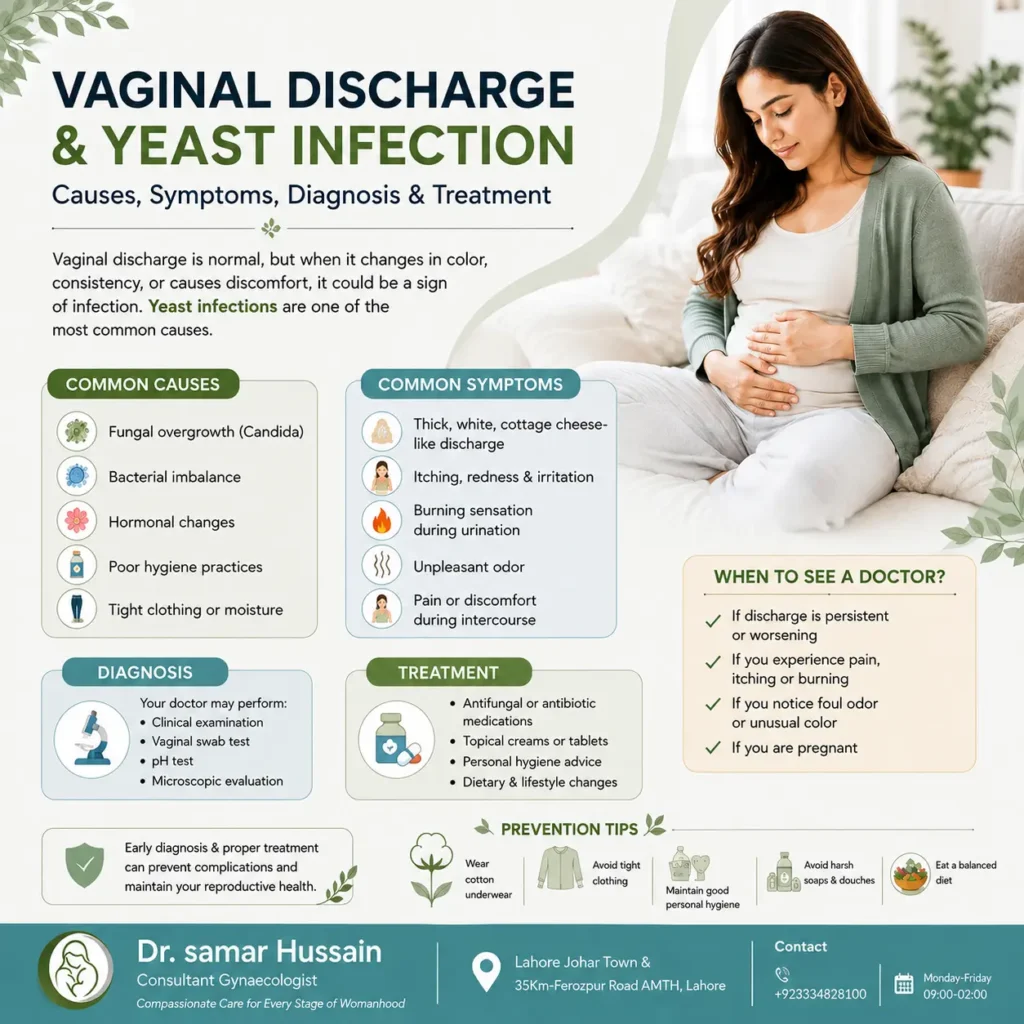
Vaginal Discharge
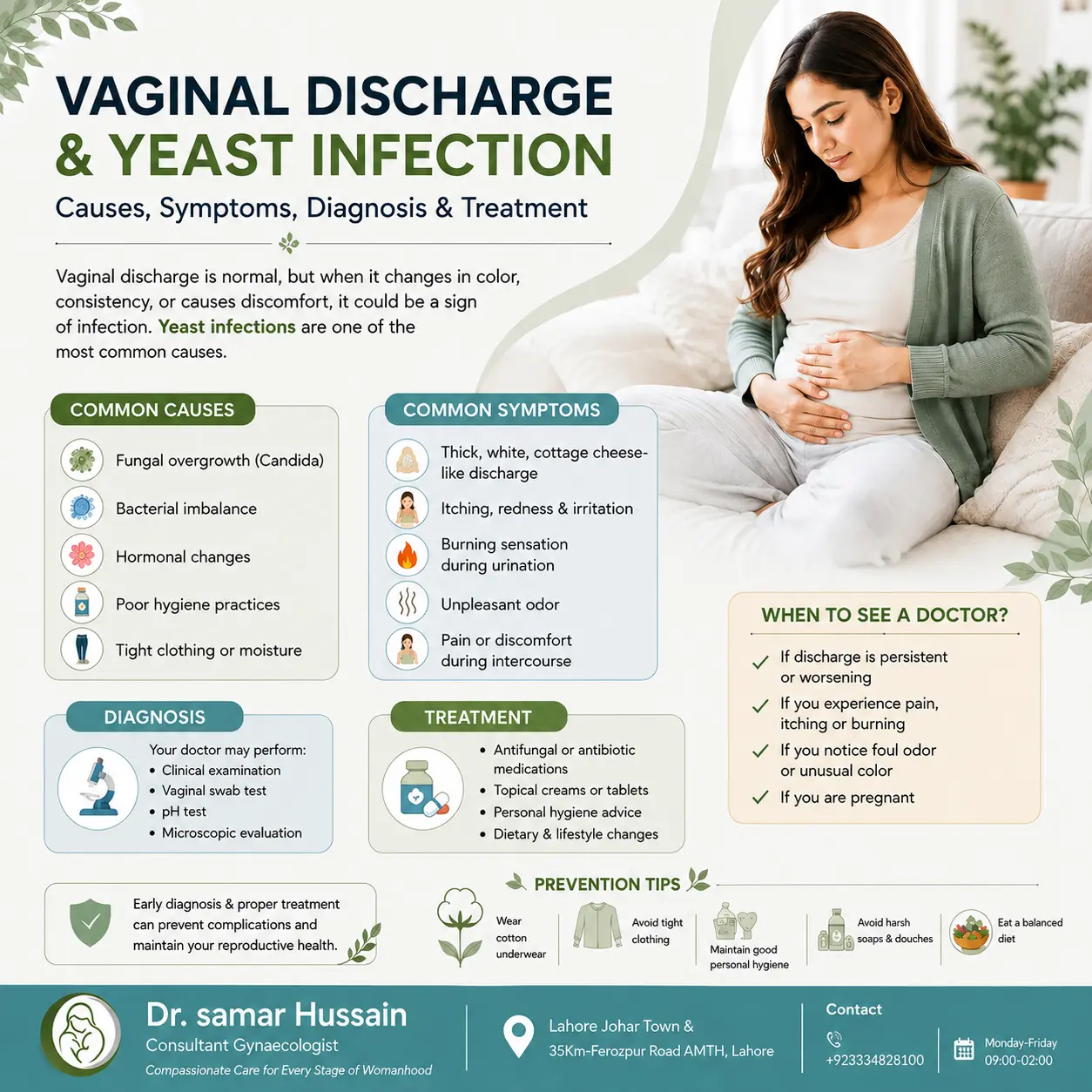
Noticing a change in vaginal discharge can feel confusing and, at times, worrying. Is it normal? Is it an infection? Should you see a doctor? The truth is that some discharge is a completely healthy part of the female reproductive system, while other types signal an underlying infection that needs attention. Understanding the difference is the first step toward feeling confident about your body.
In this guide, Dr. Samar Hussain explains what counts as normal, what changes may indicate a yeast infection or other issue, and how these conditions are diagnosed and treated.
What is Normal Vaginal Discharge?
Vaginal discharge is a natural fluid produced by glands in the vagina and cervix. It plays an important role in keeping the vaginal area clean, maintaining a healthy pH balance, and protecting against infection. Normal discharge is usually:
- Clear or milky white in color
- Mild or odorless (or with a very slight, non-unpleasant smell)
- Changing in texture and amount throughout the menstrual cycle — thinner and more abundant around ovulation, thicker afterward
Discharge amount and consistency can also shift during pregnancy, while breastfeeding, or with hormonal birth control use, and these changes are typically nothing to worry about.
What Causes Abnormal Discharge or a Yeast Infection?
When discharge changes in color, smell, texture, or is accompanied by discomfort, it usually points to an imbalance or infection. The most common causes include:
1. Yeast Infection (Candidiasis)
Caused by an overgrowth of Candida, a fungus that naturally lives in the vagina in small amounts. When the vaginal environment is disrupted, this fungus can multiply and cause an infection. Common triggers include:
- Antibiotic use, which disrupts healthy bacterial balance
- Uncontrolled diabetes or high blood sugar
- Hormonal changes, including pregnancy
- Weakened immunity
- Wearing tight, non-breathable underwear or damp clothing for long periods
2. Bacterial Vaginosis (BV)
Caused by an imbalance of naturally occurring vaginal bacteria, BV often produces a thin, grayish discharge with a strong odor, especially after intercourse.
3. Sexually Transmitted Infections (STIs)
Certain STIs, such as trichomoniasis, chlamydia, or gonorrhea, can also cause unusual discharge along with other symptoms and require specific testing and treatment.
4. Poor Hygiene Practices
Using scented soaps, douching, or harsh feminine washes can disrupt the natural vaginal flora and increase susceptibility to infection.
5. Hormonal Fluctuations
Changes related to the menstrual cycle, pregnancy, or menopause can affect discharge consistency and volume.
If you’re also dealing with urinary symptoms alongside discharge changes, it’s worth reading about UTI in women, as the two conditions can sometimes occur together.
Symptoms That Need Attention
While mild variations in discharge are usually harmless, certain symptoms suggest an infection that needs evaluation:
Yeast Infection Symptoms
- Thick, white, cottage cheese-like discharge
- Intense itching and irritation around the vulva
- Redness and swelling of the vaginal area
- Burning sensation, especially during urination or intercourse
- Usually little to no odor
Bacterial Vaginosis Symptoms
- Thin, grayish-white discharge
- A strong, fishy odor, particularly noticeable after sex
- Mild itching or burning (though many women have no discomfort at all)
Signs That May Point to an STI
- Yellow, green, or frothy discharge
- Strong or foul odor
- Pelvic pain
- Pain during intercourse
- Bleeding between periods
Any of these symptoms — especially if persistent or worsening — should prompt a visit to your gynecologist rather than self-treatment, since the wrong treatment for the wrong condition can make things worse.
How is the Condition Diagnosed?
A gynecologist typically diagnoses the underlying cause through:
- Physical and pelvic examination — to check for redness, swelling, and discharge characteristics
- Vaginal pH testing — a normal pH usually rules out bacterial vaginosis, since BV raises vaginal pH
- Microscopic examination — a sample of discharge is examined under a microscope to identify yeast, bacteria, or trichomonas
- Vaginal culture or swab test — used when the diagnosis is unclear or infections keep recurring
- STI screening — recommended if symptoms suggest a sexually transmitted infection
Self-diagnosing based on symptoms alone can be misleading, since yeast infections, BV, and STIs can sometimes present with overlapping signs.
Treatment Options
Treatment depends entirely on the underlying cause, which is why proper diagnosis matters before starting any medication.
1. Antifungal Treatment for Yeast Infections
- Over-the-counter or prescription antifungal creams, suppositories, or tablets (such as fluconazole) are typically effective
- Recurrent yeast infections (four or more per year) may require a longer treatment course and further evaluation for underlying causes like diabetes
2. Antibiotics for Bacterial Vaginosis
- Oral or vaginal antibiotic treatment, prescribed by a doctor, usually resolves BV within a week
- It’s important to complete the full course even if symptoms improve early
3. STI-Specific Treatment
- Treatment varies by infection type and may require antibiotics or antiviral medication, along with partner treatment in some cases
4. Lifestyle and Preventive Measures
- Wear breathable, cotton underwear and avoid tight-fitting clothing
- Avoid douching and scented feminine hygiene products
- Change out of wet swimwear or sweaty clothing promptly
- Maintain good blood sugar control if diabetic
- Wipe front to back after using the washroom
- Avoid unnecessary antibiotic use
5. Probiotic Support
Some women find that probiotic supplements or foods containing live cultures help maintain healthy vaginal flora, particularly after antibiotic use, though this should be discussed with your doctor.
Women managing recurring infections alongside other gynecological concerns, such as those using contraception for family planning, should mention this during consultations, as certain birth control methods can influence vaginal flora.
Can Discharge Changes Signal Something More Serious?
In most cases, changes in discharge relate to common, treatable infections. However, persistent, unusual, or blood-tinged discharge — particularly in women past menopause — should always be evaluated promptly, as it can occasionally indicate other gynecological conditions that require further investigation.
According to the Centers for Disease Control and Prevention (CDC), abnormal discharge accompanied by odor, itching, or pain is one of the most common reasons women seek gynecological care, and timely treatment prevents complications and discomfort.
When Should You See a Gynecologist?
Book a consultation if you experience:
- Discharge with a strong or unpleasant odor
- Persistent itching, burning, or irritation
- Discharge that is green, yellow, gray, or frothy
- Pain during intercourse or urination
- Recurrent infections (more than a few times a year)
- Any bleeding between periods or after menopause
- Symptoms that don’t improve with over-the-counter treatment
Frequently Asked Questions
Q1: Is some vaginal discharge normal every day? Yes. A certain amount of clear or white discharge is completely normal and helps keep the vagina clean and healthy.
Q2: Can yeast infections go away on their own? Mild cases sometimes resolve without treatment, but most require antifungal medication for complete and faster relief, especially to prevent recurrence.
Q3: Are yeast infections sexually transmitted? No, yeast infections are not classified as an STI, although sexual activity can sometimes contribute to irritation or imbalance.
Q4: Why do I keep getting yeast infections repeatedly? Recurrent infections can be linked to uncontrolled diabetes, hormonal changes, certain contraceptive methods, or underlying immune issues, and should be evaluated by a doctor.
Q5: Can I use over-the-counter treatment without seeing a doctor? For a first-time, mild, clearly yeast-related infection, over-the-counter treatment may help. However, if symptoms are unclear, recurrent, or severe, a proper diagnosis prevents mistreatment.
Q6: Does diet affect vaginal health? A balanced diet, good hydration, and blood sugar control can support healthy vaginal flora and reduce the risk of recurrent infections.
Final Thoughts
Changes in vaginal discharge are common, and in most cases, they are easily treatable once properly diagnosed. Self-treating based on guesswork can sometimes delay proper care or worsen symptoms, so professional evaluation is always the safest approach when something feels different or uncomfortable.
If you’re experiencing unusual discharge, itching, or discomfort, Dr. Samar Hussain provides confidential, professional consultations to identify the exact cause and get you the right treatment quickly.
Book Your Appointment with Dr. Samar Hussain Today for expert care and peace of mind.
Sources: Mayo Clinic – Vaginal Yeast Infection, Centers for Disease Control and Prevention (CDC) – Vaginal Discharge