
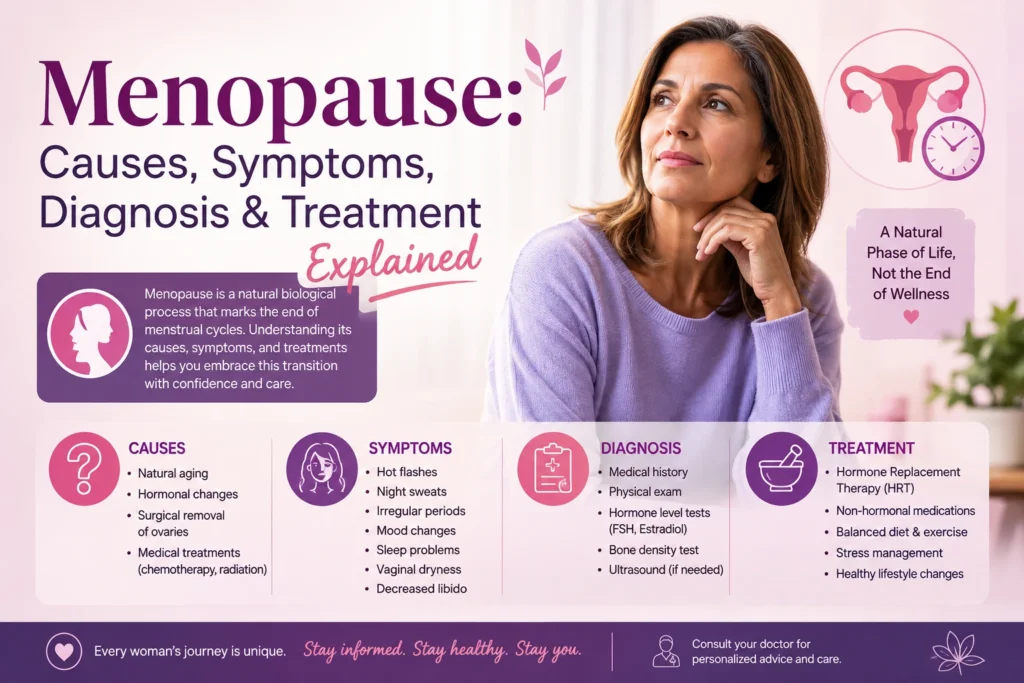

Menopause: Causes, Symptoms, Diagnosis & Treatment Explained
Hot flashes that strike without warning, sleepless nights, mood swings that seem to come out of nowhere — for many women, this stage of life arrives with more confusion than clarity. The good news is that it is not an illness. It is a natural biological transition, and with the right guidance, it can be managed comfortably and confidently.
In this guide, Dr. Samar Hussain explains what this transition really is, why it happens, what to expect, and how it can be diagnosed and treated effectively.
What is Menopause?
Menopause is the point in a woman’s life when her menstrual periods stop permanently, marking the end of her reproductive years. It is officially confirmed after 12 consecutive months without a period. This typically occurs between the ages of 45 and 55, with the average age being around 51, though it can vary based on genetics, lifestyle, and overall health.
The stage leading up to it is called perimenopause, and it can begin several years before periods stop completely. During this transitional phase, hormone levels — particularly estrogen and progesterone — start to fluctuate, which is what triggers most of the symptoms women experience.
What Causes This Transition?
This stage happens because the ovaries gradually produce less estrogen and progesterone, the two hormones that regulate the menstrual cycle. As egg supply declines with age, ovulation becomes irregular and eventually stops altogether. While natural aging is the most common reason, it can also be triggered by:
- Surgical removal of the ovaries (oophorectomy), which causes an immediate shift regardless of age
- Chemotherapy or radiation therapy, which can damage ovarian function
- Primary ovarian insufficiency, where the ovaries stop working normally before age 40
- Certain autoimmune or genetic conditions that affect ovarian health
Understanding the underlying cause matters because surgically induced or early cases often require a different treatment approach compared to the natural process.
Common Symptoms to Watch For
Every woman experiences this differently. Some sail through with minimal discomfort, while others face symptoms that significantly affect daily life. The most common signs include:
1. Hot Flashes and Night Sweats
A sudden feeling of intense heat, often accompanied by sweating and a flushed face, is one of the hallmark signs of this stage. These can occur during the day or disrupt sleep at night.
2. Irregular Periods
Before cycles stop completely, they often become unpredictable — shorter, longer, heavier, or lighter than usual.
3. Vaginal Dryness
Declining estrogen levels reduce natural lubrication, which can cause discomfort, itching, or pain during intercourse.
4. Mood Changes
Anxiety, irritability, and low mood are common during this phase, often linked to fluctuating hormones and disrupted sleep.
5. Sleep Disturbances
Many women report difficulty falling or staying asleep, often worsened by night sweats.
6. Weight Gain and Slower Metabolism
Hormonal shifts can lead to changes in fat distribution, particularly around the abdomen, along with a slower metabolic rate.
7. Thinning Hair and Dry Skin
Reduced estrogen affects collagen production, which can make skin feel drier and hair appear thinner.
8. Decreased Bone Density
Estrogen plays a protective role in bone health, so its decline increases the risk of osteoporosis and fractures.
9. Reduced Libido
Many women notice a drop in sexual desire, often related to hormonal shifts, vaginal dryness, or emotional factors.
If you’re already managing irregular or heavy periods, it’s worth understanding how conditions like heavy menstrual bleeding can sometimes overlap with symptoms of this transition.
How is It Diagnosed?
In most cases, diagnosis is based on age and symptoms alone, particularly the absence of periods for 12 consecutive months. However, your gynecologist may recommend additional tests to confirm things or rule out other conditions, including:
- FSH (Follicle-Stimulating Hormone) blood test — levels rise significantly as the ovaries slow down
- Estradiol level test — to measure estrogen levels
- Thyroid function test — since thyroid disorders can mimic similar symptoms
- Pelvic ultrasound — to assess the uterus and ovaries and rule out other gynecological issues
If symptoms appear before age 40, proper evaluation becomes even more important to identify conditions like primary ovarian insufficiency.
Menopause Treatment Options
Treatment isn’t always necessary, but managing symptoms can dramatically improve quality of life. It is highly individualized and depends on symptom severity, medical history, and personal preference.
1. Hormone Replacement Therapy (HRT)
HRT replaces the estrogen (and sometimes progesterone) that the body stops producing. It is one of the most effective options for hot flashes, night sweats, and vaginal dryness. However, it isn’t suitable for everyone, and your doctor will evaluate your personal risk factors, including history of breast cancer, blood clots, or heart disease, before recommending it.
2. Non-Hormonal Medications
For women who cannot or prefer not to use HRT, certain antidepressants, blood pressure medications, and other non-hormonal drugs can help manage hot flashes and mood symptoms.
3. Vaginal Estrogen
For localized discomfort like dryness and pain during intercourse, low-dose vaginal estrogen creams, rings, or tablets can be highly effective with minimal systemic absorption.
4. Lifestyle Modifications
- Regular exercise to support bone health, mood, and weight management
- A calcium and vitamin D-rich diet to protect against osteoporosis
- Reducing caffeine, alcohol, and spicy foods, which can trigger hot flashes
- Practicing stress-reduction techniques like yoga or meditation
- Maintaining a cool sleep environment to reduce night sweats
5. Bone Health Monitoring
Since this stage increases osteoporosis risk, your doctor may recommend a bone density scan (DEXA scan) and calcium/vitamin D supplementation as a preventive measure.
6. Regular Gynecological Checkups
Even afterward, routine checkups remain essential for monitoring bone health, cardiovascular risk, and overall wellbeing. Women who previously required contraception for family planning should also discuss how their health needs shift during this time.
Long-Term Health Effects
The drop in estrogen doesn’t just cause short-term discomfort — it also affects long-term health in ways many women aren’t aware of:
- Heart health: Estrogen has a protective effect on the cardiovascular system, so the risk of heart disease increases afterward.
- Bone health: Bone loss accelerates in the years immediately following this transition, making fracture prevention a priority.
- Urinary health: Thinning of vaginal and urinary tract tissue can lead to increased urinary tract infections or urgency.
This is why ongoing care isn’t just about symptom relief — it’s about long-term preventive health planning with your gynecologist.
When Should You See a Gynecologist?
You should schedule a consultation if you experience:
- Periods that stop for several months and then return (this needs to be evaluated)
- Heavy bleeding during the transitional phase
- Severe hot flashes or night sweats affecting your daily life
- Any vaginal bleeding after your periods have fully stopped (this always needs urgent evaluation)
- Symptoms appearing before age 40
- Difficulty coping emotionally with the changes
According to the American College of Obstetricians and Gynecologists (ACOG), any bleeding once periods have permanently stopped is considered abnormal and should always be evaluated by a doctor to rule out serious causes.
Frequently Asked Questions
Q1: At what age does this usually start? Most women reach this stage between 45 and 55 years of age, with the average being around 51. However, early symptoms can begin several years earlier.
Q2: Can it happen suddenly? The natural process is usually gradual, occurring over several years. A sudden shift can happen due to surgical removal of the ovaries or certain medical treatments like chemotherapy.
Q3: Is weight gain during this time avoidable? While hormonal changes do slow metabolism, maintaining a balanced diet and regular physical activity can help manage weight effectively during this stage.
Q4: Does this affect fertility immediately? The transitional phase can still involve occasional ovulation, so pregnancy remains possible until periods have fully stopped for 12 months. Women who are not planning pregnancy should continue using contraception during this time.
Q5: Is bleeding afterward normal? No. Any vaginal bleeding once periods have permanently stopped should be evaluated by a gynecologist promptly, as it can indicate an underlying condition that needs attention.
Q6: Can hormone replacement therapy be used long-term? The duration of use depends on individual health factors and should be reviewed periodically with your doctor to weigh ongoing benefits against risks.
Final Thoughts
This stage of life is a natural transition, not a medical problem to fear — but that doesn’t mean you have to manage it alone. With the right combination of medical guidance, lifestyle adjustments, and emotional support, it can be navigated comfortably and confidently.
If you’re experiencing symptoms or have concerns about your hormonal health, Dr. Samar Hussain offers personalized consultations to help you understand your body and find the right treatment plan for you.
Book Your Appointment with Dr. Samar Hussain Today and take the first step toward a smoother journey through this stage of life.
Sources: Mayo Clinic – Menopause, American College of Obstetricians and Gynecologists (ACOG)