
Ovarian Cysts: Types, Symptoms & Treatment
If you’ve recently been told you have an ovarian cyst, or you’re experiencing unfamiliar pelvic discomfort and searching for answers, take a breath — you are not alone, and in the vast majority of cases, this is a manageable and treatable condition. Ovarian cysts are one of the most common findings in women’s reproductive health, and most of them cause no harm at all, resolving quietly on their own without you ever noticing.
That said, some cysts do need medical attention, and understanding the different types, symptoms, and treatment options can help you feel more in control of your health. This guide walks you through everything you need to know about ovarian cysts — from the harmless kind that come and go with your monthly cycle, to the rarer types that require closer monitoring or surgery — so you can make informed decisions and know exactly when it’s time to see a gynecologist.
What Are Ovarian Cysts?
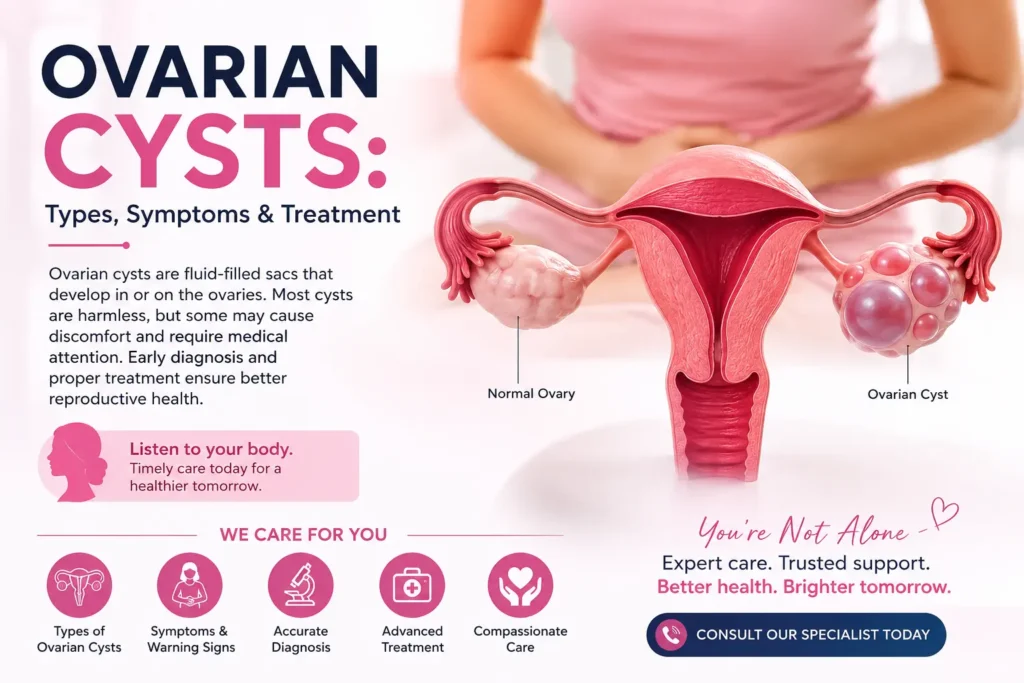
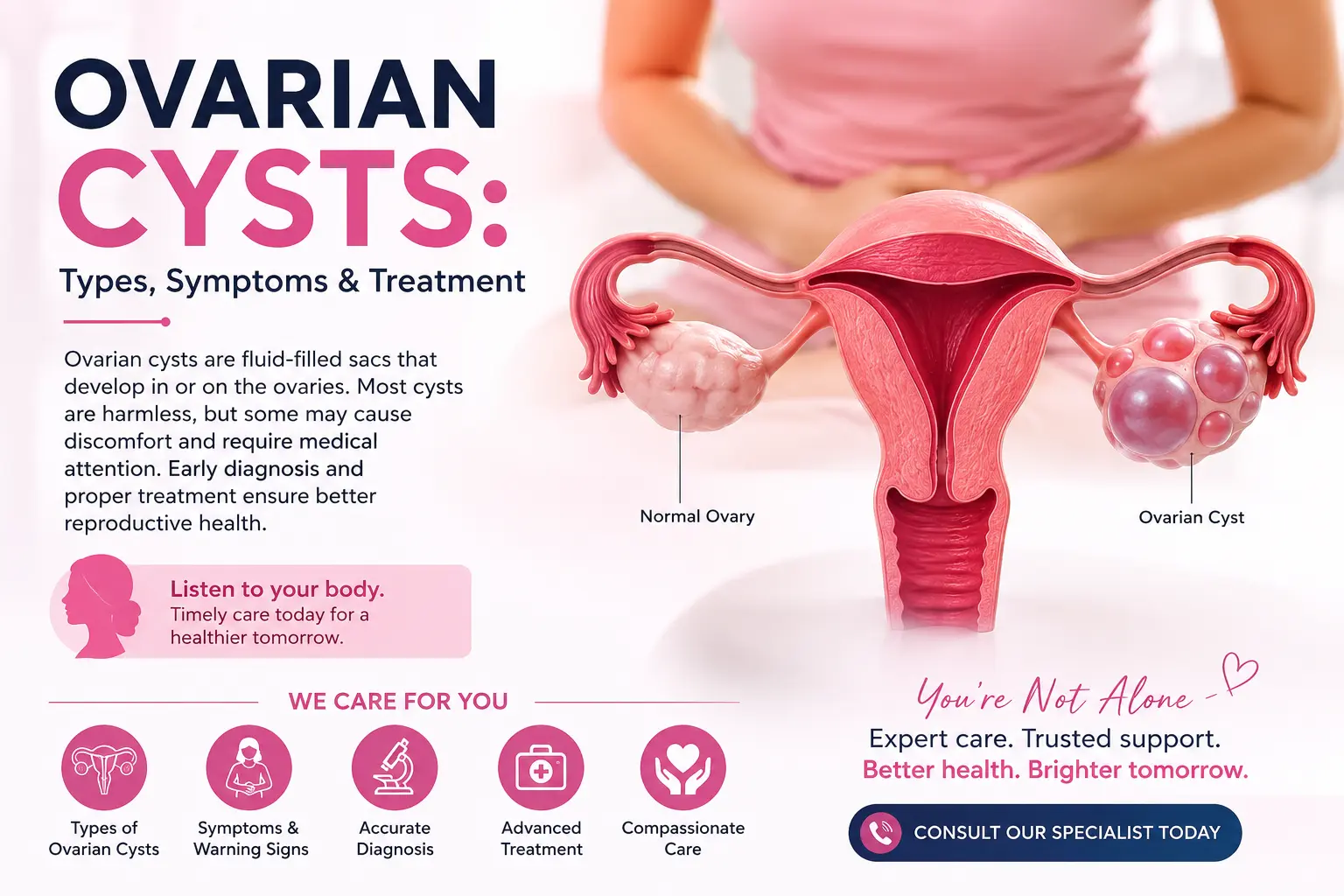
An ovarian cyst is a fluid-filled sac that forms on or inside one of the ovaries. The ovaries are two small, almond-shaped organs located on either side of the uterus, responsible for producing eggs and hormones like estrogen and progesterone.
Cysts form naturally as part of the ovulation process in many cases, which is why they are so common during a woman’s reproductive years. Most cysts are benign (non-cancerous), small, and symptom-free. They often disappear within a few menstrual cycles without any treatment.
However, cysts can vary widely in size, structure, and cause. Some are simple and fluid-filled, while others are more complex, containing solid tissue, blood, or other material. This is why not every cyst is treated the same way, and why a proper diagnosis matters.
How Common Are Ovarian Cysts?
Ovarian cysts are extremely common. Most women will develop at least one cyst at some point during their reproductive life, often without ever knowing it, since many cysts cause no symptoms and are discovered incidentally during a routine ultrasound or pelvic exam.
Functional cysts, the most common type, are especially frequent in women of reproductive age because they are directly tied to the menstrual cycle. Cysts become less common after menopause, though when they do occur in postmenopausal women, they are evaluated more carefully.
Types of Ovarian Cysts
Not all ovarian cysts are the same. Understanding the different types can help explain why your doctor may recommend different approaches — from simple monitoring to surgery.
Functional Cysts
Functional cysts are the most common type and form as a normal part of ovulation. They are almost always harmless and typically resolve on their own within one to three menstrual cycles.
Follicular cyst: Each month, an egg develops inside a small sac called a follicle. Normally, the follicle ruptures to release the egg. If it doesn’t rupture and instead continues to grow, it becomes a follicular cyst. These are usually painless and disappear without treatment.
Corpus luteum cyst: After the egg is released, the follicle transforms into a structure called the corpus luteum, which produces hormones to support a potential pregnancy. If the corpus luteum reseals and fills with fluid or blood instead of dissolving, it forms a cyst. These can sometimes grow larger and cause mild discomfort or, occasionally, bleeding.
Dermoid Cyst
Dermoid cysts (also called mature teratomas) are unusual in that they can contain tissue such as hair, skin, or even teeth, since they develop from cells present from birth. They are typically benign but can grow quite large and, in rare cases, twist the ovary, requiring surgical removal.
Cystadenoma
Cystadenomas develop from ovarian tissue and are filled with a watery or mucous-like fluid. They can range from small to very large and, while usually benign, may require surgical removal if they grow significantly.
Endometrioma
Also known as a “chocolate cyst,” an endometrioma forms when endometrial-like tissue (the tissue that normally lines the uterus) grows on the ovary, as seen in endometriosis. These cysts are filled with old, dark blood and can cause significant pain, especially during periods.
Hemorrhagic Cyst
A hemorrhagic cyst occurs when a functional cyst bleeds internally. This can cause sudden, sharp pelvic pain, though many hemorrhagic cysts resolve on their own with rest and pain management.
Complex Ovarian Cyst
A complex cyst contains both fluid and solid components, or has irregular walls or septations (internal divisions) visible on ultrasound. These require closer evaluation, as they carry a slightly higher chance of needing further testing to rule out other causes.
Causes and Risk Factors
Several factors can increase the likelihood of developing ovarian cysts:
- Hormonal imbalance: Irregular hormone levels can disrupt normal ovulation, leading to functional cysts.
- Pregnancy: Cysts can form early in pregnancy to support the developing embryo and usually resolve on their own.
- Endometriosis: This condition directly leads to the formation of endometriomas.
- PCOS (Polycystic Ovary Syndrome): Women with PCOS often have multiple small cysts on their ovaries due to hormonal irregularities.
- Previous ovarian cysts: A history of cysts increases the likelihood of developing more.
- Pelvic infections: Severe infections can spread and affect the ovaries, occasionally leading to cyst formation.
- Fertility medications: Drugs used to stimulate ovulation can sometimes cause the ovaries to develop multiple cysts.
- Age-related factors: Cyst types and risks shift with age, with functional cysts more common during reproductive years and closer monitoring needed for cysts after menopause.
Symptoms of Ovarian Cysts
Many ovarian cysts cause no symptoms at all and are discovered by chance. When symptoms do occur, they may include:
- Pelvic pain or a dull ache, often on one side
- Lower abdominal pain
- Bloating or a feeling of fullness
- Pain during intercourse
- Irregular periods or unusual menstrual bleeding
- Frequent urination
- Difficulty fully emptying the bladder
- Feeling full quickly after eating small amounts
- Nausea
- Vomiting
- Lower back pain
It’s worth noting again: asymptomatic cysts are very common, and the absence of symptoms doesn’t necessarily mean a cyst isn’t there, nor does having symptoms always mean something serious is happening.
Warning Signs That Need Immediate Medical Care
While most cysts are harmless, certain symptoms signal a medical emergency and require immediate attention:
- Ovarian torsion: Sudden, severe pelvic pain, often accompanied by nausea and vomiting, caused by the ovary twisting on its supporting tissue and cutting off blood supply.
- Ruptured ovarian cyst: Sudden, sharp pain, sometimes with light to moderate vaginal bleeding.
- Severe internal bleeding: Can occur with a ruptured hemorrhagic cyst, leading to dizziness or fainting.
- Sudden severe pelvic pain that comes on abruptly rather than building gradually.
- Fever combined with pelvic pain, which may indicate infection.
- Fainting or dizziness, especially alongside pain, which may signal blood loss.
If you experience any of these symptoms, seek emergency medical care right away rather than waiting to see if it improves.
Ovarian Cysts During Pregnancy
Ovarian cysts, most commonly corpus luteum cysts, are frequently seen in early pregnancy and typically resolve by the second trimester as the placenta takes over hormone production. Most are monitored with ultrasound rather than treated actively, since surgery during pregnancy carries additional risks. However, large or persistent cysts, or those causing significant pain, may need further evaluation by a specialist to protect both mother and baby.
Ovarian Cysts After Menopause
After menopause, ovarian cysts are less common since ovulation has stopped. When a cyst does appear in a postmenopausal woman, doctors typically recommend more thorough evaluation, including ultrasound and sometimes a CA-125 blood test, simply as a precaution to rule out other causes. This doesn’t mean the cyst is dangerous — many postmenopausal cysts are still benign — but careful monitoring is standard practice at this stage of life.
PCOS vs Ovarian Cysts
PCOS (Polycystic Ovary Syndrome) is often confused with having “ovarian cysts,” but the two are quite different conditions.
| Feature | Ovarian Cyst | PCOS |
|---|---|---|
| Definition | A single fluid-filled sac on the ovary | A hormonal disorder affecting ovulation |
| Number | Usually one, sometimes a few | Many small follicles on both ovaries |
| Cause | Ovulation process, endometriosis, or other growths | Hormonal imbalance affecting the whole body |
| Hormonal impact | Usually minimal | Often causes irregular periods, excess androgens |
| Associated symptoms | Localized pelvic pain, bloating | Irregular periods, acne, weight changes, excess hair growth |
| Treatment approach | Monitoring or removal depending on type | Long-term hormonal and lifestyle management |
In short, an ovarian cyst is typically a standalone growth, while PCOS is a broader hormonal condition that can also involve multiple small cysts as one of its features. The World Health Organization (WHO) offers further insight into PCOS as a global women’s health concern.
How Ovarian Cysts Are Diagnosed
If a cyst is suspected, your gynecologist will typically use a combination of the following:
- Medical history: Discussing your menstrual cycle, symptoms, and any relevant family history.
- Physical examination: A general check to assess overall health.
- Pelvic examination: To feel for any abnormalities in the ovaries or uterus.
- Ultrasound: The primary imaging tool used to see the size, location, and structure of a cyst.
- Transvaginal ultrasound: Provides a clearer, closer view of the ovaries compared to an abdominal ultrasound.
- Pregnancy test: To rule out pregnancy-related causes.
- Blood tests: To check hormone levels and overall health markers.
- CA-125 test: A blood test sometimes used, particularly in postmenopausal women or complex cysts, to help assess the likelihood of malignancy — though it is not a standalone diagnostic tool.
- CT scan: Occasionally used for a more detailed view of the pelvic and abdominal area.
- MRI: Reserved for cases where ultrasound findings are unclear and more detail is needed.
For more detailed clinical guidance on evaluating ovarian cysts, the American College of Obstetricians and Gynecologists (ACOG) offers comprehensive patient resources on diagnosis and management.
Treatment Options
Treatment depends on the cyst’s size, type, symptoms, and your age and reproductive plans.
Watchful Waiting
For most functional cysts, especially in younger women, the recommended approach is simply monitoring with a follow-up ultrasound in a few weeks to confirm the cyst has resolved on its own.
Medications
While medications cannot shrink an existing cyst, hormonal treatments may help prevent new functional cysts from forming.
Hormonal Birth Control
Birth control pills or other hormonal methods can regulate ovulation, which reduces the likelihood of new functional cysts developing in the future.
Pain Management
Over-the-counter pain relievers can help manage mild to moderate discomfort associated with cysts while they are monitored or resolve naturally.
Laparoscopic Surgery
For cysts that are large, persistent, or causing significant symptoms, minimally invasive laparoscopic surgery is often used. This involves small incisions and typically allows for a quicker recovery compared to open surgery.
Open Surgery (Laparotomy)
In cases of very large cysts, or when there is concern about malignancy, a more traditional open surgical approach may be necessary to safely remove the cyst.
Emergency Treatment
In cases of ovarian torsion or a ruptured cyst causing heavy internal bleeding, emergency surgery is required to prevent further complications and preserve ovarian function where possible.
Can Ovarian Cysts Go Away on Their Own?
Yes — in fact, most functional cysts resolve entirely on their own within one to three menstrual cycles, without any treatment at all. This is why “watchful waiting” with a follow-up ultrasound is such a common and effective first approach. Cysts that are unlikely to resolve naturally, such as dermoid cysts or cystadenomas, are the ones more likely to require medical or surgical intervention. The Mayo Clinic provides additional reliable information on how different cyst types typically progress.
Possible Complications
While uncommon, potential complications of ovarian cysts include:
- Ovarian torsion (twisting of the ovary)
- Cyst rupture with internal bleeding
- Chronic pelvic pain, particularly with endometriomas
- Pressure on nearby organs if the cyst grows very large
- In rare cases, malignant transformation, more closely monitored in complex or postmenopausal cysts
Being aware of these possibilities isn’t meant to cause worry — it’s meant to help you recognize when something needs prompt attention.
Prevention Tips
While you cannot completely prevent ovarian cysts, especially functional ones tied to ovulation, some habits support overall ovarian and hormonal health:
- Attend regular gynecological check-ups, even without symptoms
- Track your menstrual cycle to notice unusual changes early
- Maintain a balanced, nutrient-rich diet
- Exercise regularly to support hormonal balance
- Manage stress, which can influence hormone regulation
- Discuss hormonal birth control with your doctor if you have recurrent functional cysts
When Should You See a Gynecologist?
You should schedule a visit with a gynecologist if you experience:
- Persistent pelvic or abdominal pain
- Unusual bloating that doesn’t go away
- Irregular or unusually heavy periods
- Pain during intercourse
- Any of the emergency warning signs mentioned above, in which case seek immediate care rather than waiting for an appointment
Even without symptoms, routine gynecological visits help catch cysts early, particularly if you have risk factors like endometriosis or PCOS.
Living with Ovarian Cysts
Being diagnosed with an ovarian cyst can feel unsettling, especially with so much information — and misinformation — available. But it’s important to remember that the overwhelming majority of ovarian cysts are benign, temporary, and treatable. With regular monitoring, the right treatment plan, and open communication with your gynecologist, most women go on to live completely normal, healthy lives, and continue to have successful pregnancies when they choose to.
If you have a condition like endometriosis or PCOS that predisposes you to recurring cysts, working closely with your doctor on a long-term management plan can make a significant difference in your quality of life.
Frequently Asked Questions (FAQs)
1. Are ovarian cysts cancer? The vast majority of ovarian cysts are benign and not cancerous. Cancerous ovarian growths are relatively rare, particularly in younger women, though your doctor may recommend additional testing for complex cysts or those found after menopause, simply as a precaution.
2. Can ovarian cysts disappear naturally? Yes, most functional cysts resolve on their own within a few menstrual cycles without any treatment.
3. Can ovarian cysts affect fertility? Simple functional cysts generally don’t affect fertility. However, conditions like endometriomas or PCOS-related cysts can impact fertility and may require a more tailored treatment approach.
4. Can I get pregnant with an ovarian cyst? Yes, many women with ovarian cysts conceive successfully. Small, simple cysts rarely interfere with pregnancy, though your doctor may monitor larger or more complex cysts more closely.
5. Can ovarian cysts cause weight gain? Most ovarian cysts don’t directly cause weight gain. However, hormonal conditions like PCOS, which involve multiple cysts, can be associated with weight changes.
6. Are ovarian cysts painful? Many cysts cause no pain at all. When pain does occur, it’s often mild and localized, though larger cysts, ruptured cysts, or torsion can cause more significant discomfort.
7. How large is considered dangerous? There’s no single size cutoff, but cysts larger than 5-10 centimeters are generally monitored more closely, and larger cysts carry a higher risk of torsion or requiring surgical removal.
8. What foods are good for ovarian cysts? A balanced diet rich in vegetables, fruits, whole grains, and lean proteins supports overall hormonal health, though no specific food has been proven to eliminate cysts directly.
9. Can exercise help? Regular exercise supports hormonal balance and overall reproductive health, which may help reduce the recurrence of functional cysts, though it won’t shrink an existing cyst.
10. When is surgery needed? Surgery is typically considered for large cysts, cysts causing significant symptoms, cysts that don’t resolve after monitoring, or cases with signs of torsion, rupture, or concern about malignancy.
Conclusion
Ovarian cysts are an incredibly common part of many women’s reproductive health journeys, and in most cases, they resolve quietly without ever needing treatment. Understanding the different types, recognizing the symptoms that matter, and knowing when to seek help empowers you to take charge of your health with confidence rather than fear.
If you notice persistent pain, unusual symptoms, or any warning signs of a medical emergency, don’t wait it out — reach out to a qualified gynecologist. Early diagnosis and the right treatment plan lead to excellent outcomes in the overwhelming majority of cases.
Contact Us
If you are experiencing symptoms of ovarian cysts or have concerns about your reproductive health, don’t ignore the warning signs. Early diagnosis and personalized treatment can help prevent complications and protect your fertility.
At Samar OBGYN, our experienced gynecology team provides compassionate, evidence-based care for ovarian cysts, PCOS, menstrual disorders, infertility, pregnancy care, and other women’s health concerns.
Schedule your consultation today and take the first step toward better reproductive health.
Website: https://samarobgyn.pk/