
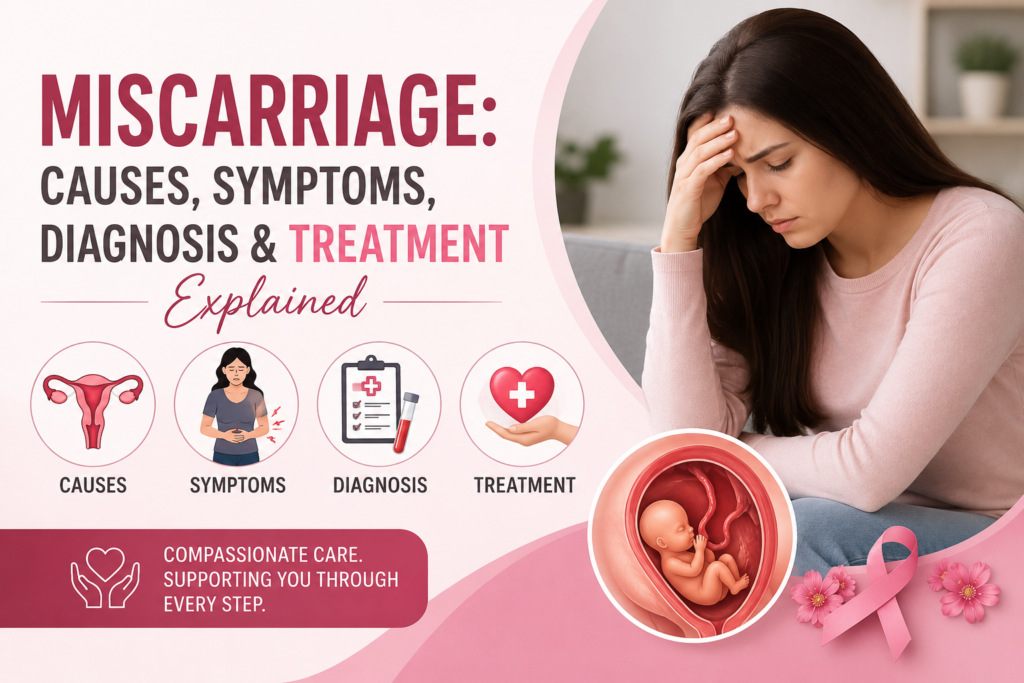
Miscarriage
Losing a pregnancy is one of the most painful experiences a woman can go through — emotionally and physically. Yet miscarriage is far more common than most people realize, affecting nearly 1 in 4 recognized pregnancies. If you or someone you love has experienced this loss, know that it is rarely caused by anything you did wrong, and understanding the “why” can help you heal and prepare for a healthy pregnancy in the future.
In this guide, Dr. Samar Hussain, Associate Professor Gynecologist & Obstetrician in Lahore, explains everything you need to know about miscarriage — its causes, warning signs, diagnosis, treatment options, and how to support your body and mind afterward.
What Is a Miscarriage?
A miscarriage, medically known as a spontaneous abortion, is the natural loss of a pregnancy before the 20th week. Most miscarriages happen in the first trimester (before 12 weeks), and many occur so early that a woman may not even know she was pregnant.
It’s important to understand that a miscarriage is a medical event, not a personal failure. In the vast majority of cases, it happens due to factors completely outside a woman’s control.
Types of Miscarriage
Not all miscarriages present the same way. Understanding the type helps guide the right treatment:
- Threatened Miscarriage – Bleeding or cramping occurs, but the cervix remains closed and the pregnancy may continue.
- Inevitable Miscarriage – Bleeding and cramping with an open cervix, meaning pregnancy loss cannot be prevented.
- Incomplete Miscarriage – Some pregnancy tissue has passed, but some remains in the uterus.
- Complete Miscarriage – All pregnancy tissue has passed from the uterus naturally.
- Missed Miscarriage – The embryo has stopped developing, but the body has not yet recognized the loss, so there are often no symptoms.
- Recurrent Miscarriage – Defined as three or more consecutive pregnancy losses, requiring specialized investigation.
Common Causes of Miscarriage
1. Chromosomal Abnormalities
This is the leading cause, responsible for 50–70% of early miscarriages. When the embryo receives an abnormal number of chromosomes during fertilization, it usually cannot develop properly, and the body ends the pregnancy naturally.
2. Hormonal Imbalances
Conditions such as low progesterone, thyroid disorders, or uncontrolled diabetes can prevent the uterine lining from properly supporting a pregnancy.
3. Uterine Abnormalities
Structural issues like a septate uterus, fibroids, or scar tissue (Asherman’s syndrome) can interfere with implantation and growth.
4. Infections
Certain infections, including untreated STIs, severe UTIs, or bacterial vaginosis, can increase miscarriage risk if left untreated.
5. Chronic Health Conditions
Uncontrolled conditions such as PCOS, diabetes, thyroid disease, and autoimmune disorders like antiphospholipid syndrome are linked to higher miscarriage rates.
6. Lifestyle Factors
Smoking, excessive alcohol consumption, high caffeine intake, and drug use are all associated with increased risk.
7. Advanced Maternal Age
Miscarriage risk rises significantly after age 35, and even more so after 40, primarily due to a higher rate of chromosomal abnormalities in eggs.
8. Cervical Insufficiency
A weak cervix that opens prematurely can lead to pregnancy loss, typically in the second trimester.
It’s worth noting clearly: normal daily activities like exercise, working, having sex, or minor falls do not cause miscarriage.
Symptoms of Miscarriage
Every woman’s experience is different, but the most common warning signs include:
- Vaginal bleeding, ranging from light spotting to heavy flow
- Cramping or lower abdominal pain
- Passing tissue or clots from the vagina
- Sudden decrease in pregnancy symptoms (nausea, breast tenderness)
- Lower back pain
- Fluid discharge from the vagina
If you experience any of these symptoms during pregnancy, contact your gynecologist immediately. Not all bleeding in early pregnancy means miscarriage — many women with light spotting go on to have healthy pregnancies — but it always needs to be checked.
How Is Miscarriage Diagnosed?
Dr. Samar Hussain typically uses a combination of the following to confirm a miscarriage:
- Ultrasound (Transvaginal or Abdominal) – To check for a fetal heartbeat and confirm the size and development of the pregnancy.
- Blood Tests (Beta-hCG levels) – Measured over 48 hours to see if pregnancy hormone levels are rising normally or falling.
- Pelvic Examination – To check whether the cervix has begun to dilate.
Treatment Options After Miscarriage
Treatment depends on the type of miscarriage and how far the pregnancy tissue has passed.
1. Expectant Management (Watchful Waiting)
If the miscarriage is in its early stages, the body may pass the tissue naturally within a few days to weeks without medical intervention.
2. Medical Management
Medication (such as misoprostol) may be prescribed to help the uterus expel the remaining pregnancy tissue, avoiding the need for surgery.
3. Surgical Management (D&C)
A Dilation and Curettage (D&C) procedure may be recommended if tissue does not pass naturally, if there is heavy bleeding, or if there are signs of infection. This is a quick, safe outpatient procedure performed under sedation.
Your gynecologist will guide you toward the safest option based on your bleeding, ultrasound findings, and overall health.
Recovery After Miscarriage
Physical recovery typically takes 1–2 weeks, though your body may take a full menstrual cycle to return to normal. During recovery:
- Avoid inserting anything into the vagina (tampons, intercourse) for at least 1–2 weeks or as advised
- Watch for signs of infection: fever, foul-smelling discharge, or worsening pain
- Attend your follow-up ultrasound to confirm the uterus is empty
- Allow your body time before trying to conceive again — most doctors recommend waiting for at least one normal menstrual cycle
Emotional recovery is just as important as physical healing. Grief after miscarriage is real and valid, regardless of how early the loss occurred. Talking to a counselor, joining a support group, or simply allowing yourself time to grieve can make a meaningful difference.
Can Future Pregnancies Be Healthy After a Miscarriage?
Yes. The majority of women who experience a miscarriage go on to have completely healthy pregnancies afterward. A single miscarriage does not necessarily mean there’s an underlying problem — it is often simply due to a one-time chromosomal error.
However, if you have experienced recurrent miscarriages (2 or more), your gynecologist may recommend further testing, including:
- Hormonal blood panels
- Uterine imaging (hysteroscopy or sonohysterogram)
- Genetic screening of both partners
- Blood clotting disorder testing
When to See a Gynecologist
Seek medical attention immediately if you experience:
- Heavy bleeding (soaking more than one pad per hour)
- Severe abdominal pain
- Fever or chills
- Foul-smelling vaginal discharge
- Signs of shock (dizziness, fainting, rapid heartbeat)
Dr. Samar Hussain provides compassionate, confidential care for women experiencing pregnancy loss, offering both in-person consultations in Lahore and Kasur, as well as online gynecologist consultation for those who prefer to discuss sensitive concerns from home.
Miscarriage Myths vs. Facts
There’s a lot of misinformation around pregnancy loss that can add unnecessary guilt to an already painful experience. Let’s clear up some common myths:
Myth: Lifting something heavy caused my miscarriage. Fact: Everyday physical activity, including lifting normal objects, does not cause miscarriage. The uterus and developing embryo are well protected.
Myth: If I had just rested more, this wouldn’t have happened. Fact: Bed rest has not been shown to prevent miscarriage in most cases. Most losses are related to chromosomal issues that occur at fertilization, long before any lifestyle factor comes into play.
Myth: One miscarriage means I’ll never carry a pregnancy to term. Fact: The vast majority of women who miscarry once go on to have healthy, full-term pregnancies afterward.
Myth: Miscarriage is always painful and dramatic. Fact: Many miscarriages, especially “missed miscarriages,” have no noticeable symptoms at all and are only discovered during a routine ultrasound.
Coping Emotionally After Pregnancy Loss
Miscarriage is not just a physical event — it is a genuine loss, and grief is a completely normal response, whether the pregnancy was 5 weeks or 18 weeks along. There is no “right” way to feel, and there is no timeline you need to follow to feel better.
Some ways to support your emotional healing include:
- Allow yourself to grieve without comparing your experience to anyone else’s
- Talk openly with your partner, a trusted friend, or family member instead of carrying it silently
- Consider professional counseling if feelings of sadness, guilt, or anxiety persist
- Join a support group, in person or online, with others who understand pregnancy loss
- Give your body time before making decisions about trying again — there’s no pressure or deadline
Partners can grieve differently too, and open communication between couples during this time is essential for healing together.
Reducing Risk for a Healthier Future Pregnancy
While most miscarriages cannot be prevented, there are steps that support the healthiest possible future pregnancy:
- Attend preconception counseling to review any chronic conditions like thyroid disease, diabetes, or PCOS
- Take a prenatal vitamin with folic acid before and during pregnancy
- Avoid smoking, alcohol, and recreational drugs
- Manage weight and blood sugar levels with your doctor’s guidance
- Space pregnancies appropriately, allowing your body time to recover
- Attend early prenatal visits so any concerns can be caught and managed quickly
Frequently Asked Questions (FAQs)
Q1: What are the first signs of a miscarriage? The earliest signs are usually vaginal bleeding or spotting, cramping in the lower abdomen, and a sudden reduction in pregnancy symptoms. However, spotting alone doesn’t always mean miscarriage — an ultrasound is the only way to confirm.
Q2: Can stress cause a miscarriage? There is no strong scientific evidence that normal, everyday stress directly causes miscarriage. Most miscarriages result from chromosomal abnormalities, not emotional stress.
Q3: How long does bleeding last after a miscarriage? Bleeding can last anywhere from a few days to 2 weeks, gradually becoming lighter. Heavy bleeding lasting longer than this should be reported to your doctor.
Q4: Do I need a D&C after every miscarriage? No. Many miscarriages resolve naturally or with medication. A D&C is only needed if tissue doesn’t pass completely, bleeding is heavy, or there’s a risk of infection.
Q5: How soon can I try to conceive again after a miscarriage? Most doctors recommend waiting until you’ve had at least one normal menstrual cycle, both to allow physical healing and to make it easier to date a future pregnancy accurately.
Q6: Is miscarriage more common with a first pregnancy? Miscarriage risk is related more to maternal age and overall health than whether it’s a first pregnancy or not.
Q7: Can a miscarriage be prevented? Since most miscarriages are due to chromosomal issues, they usually cannot be prevented. However, managing chronic conditions (diabetes, thyroid, PCOS), avoiding smoking/alcohol, and attending regular prenatal checkups can reduce certain risks.
Book Your Appointment with Dr. Samar Hussain
If you’re experiencing bleeding, pain, or uncertainty during pregnancy — or if you’ve gone through a pregnancy loss and want compassionate guidance for your next steps — Dr. Samar Hussain is here to help.
📍 Locations: RLMC & AMTH, Iffat Anwar Medical Complex, Omar Hospital Johar Town, Lahore & Kasur 📞 Contact: +92 333 4828100 🕐 Hours: Monday–Friday, 09:00 AM – 02:00 PM
👉 Book Your Appointment Now 👉 View Our Services & Packages
You don’t have to go through this alone. Reach out today for expert, confidential care tailored to your health and peace of mind.
Related Reading:
- The Major Causes of Infertility: What Every Hopeful Parent Should Know
- Ectopic Pregnancy: Causes, Symptoms, Diagnosis & Treatment Explained
- PCOS Treatment: 7 Symptoms, Causes & Diet Tips for PCOD
External Sources: