
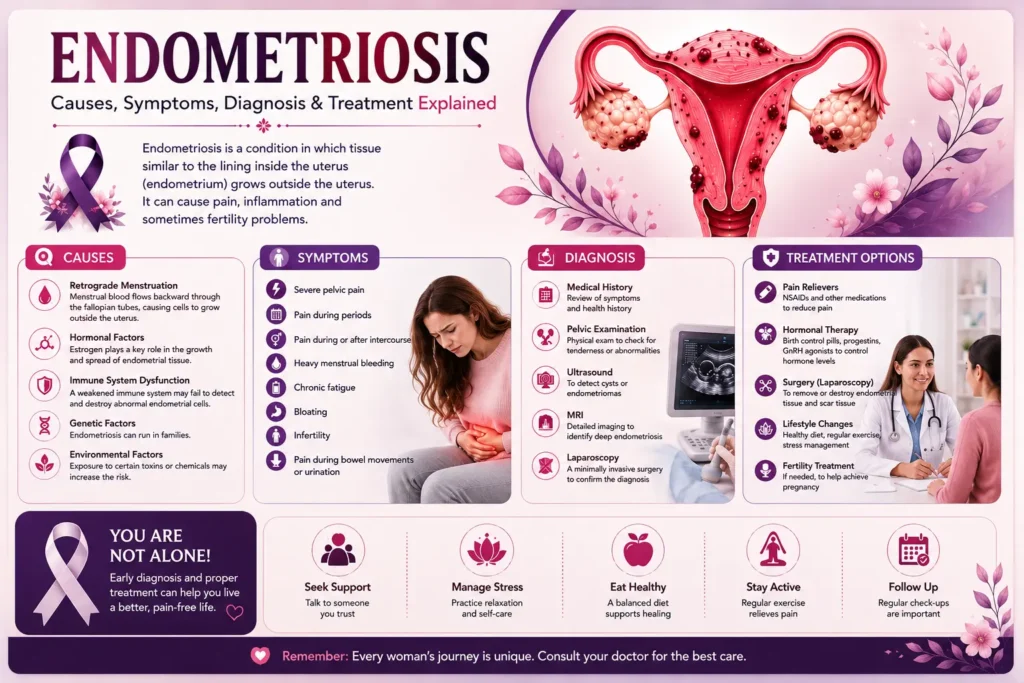
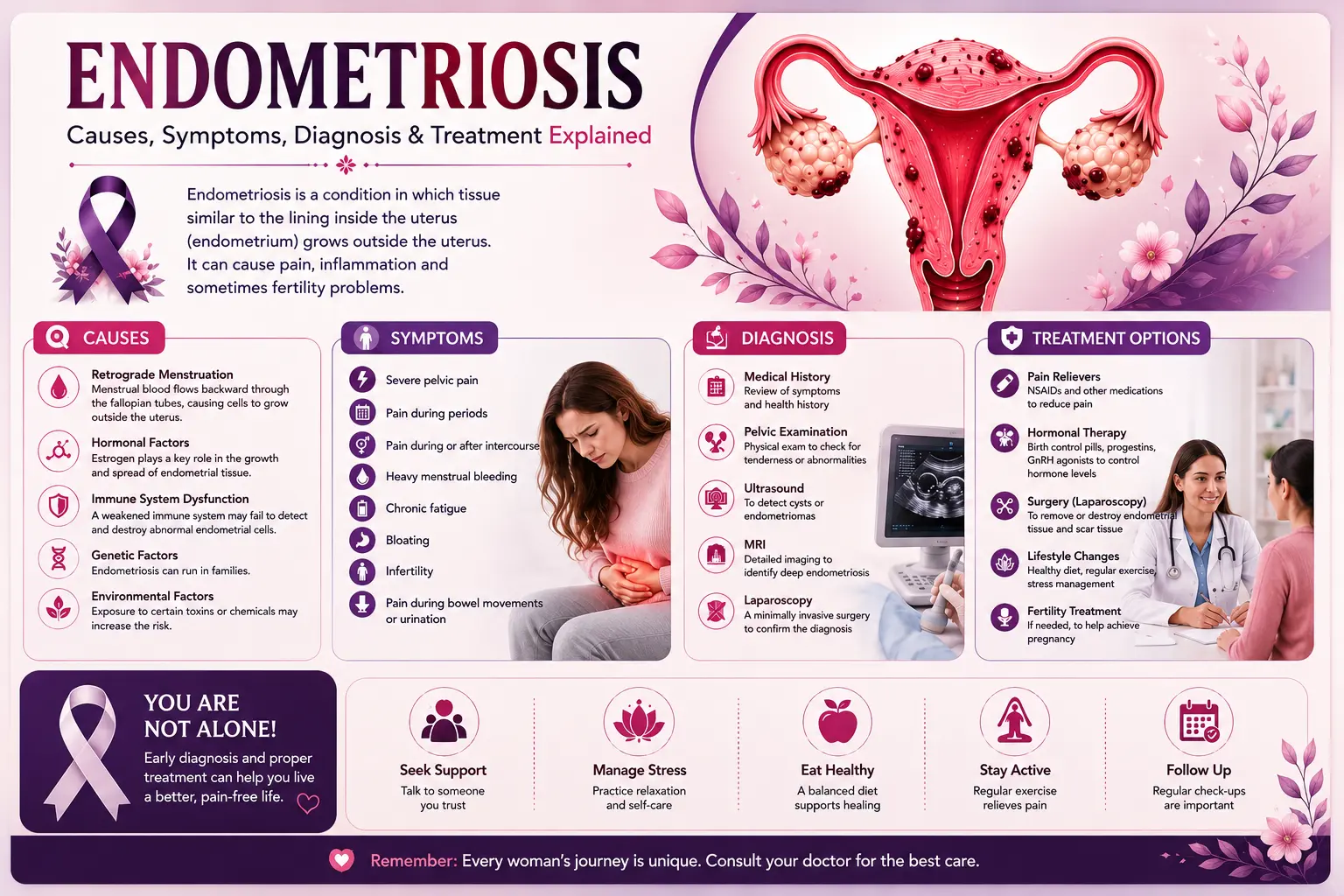
Endometriosis: Causes, Symptoms, Diagnosis & Treatment Explained
Many women live with painful periods for years, thinking it is just “normal” period pain. But sometimes, the real cause is a condition called endometriosis — a common but often misdiagnosed gynecological problem that can affect a woman’s daily life, fertility, and long-term health.
In this article, Dr. Samar Hussain explains what endometriosis is, why it happens, how it is diagnosed, and the treatment options available today.
What Is Endometriosis?
Endometriosis is a condition in which tissue similar to the lining of the uterus (called the endometrium) starts growing outside the uterus — most commonly on the ovaries, fallopian tubes, and the tissue lining the pelvis. In rare cases, it can even grow on organs like the bladder or intestines.
This misplaced tissue behaves just like the normal uterine lining. It thickens, breaks down, and bleeds with each menstrual cycle. But unlike the normal lining, which exits the body during periods, this tissue has no way to leave the body. As a result, it becomes trapped, causing inflammation, scar tissue, and painful adhesions between organs.
Endometriosis is far more common than most women realize. According to global health data, it affects roughly 1 in 10 women of reproductive age worldwide, yet many go undiagnosed for years because the symptoms are often mistaken for regular period pain.
Why Does Endometriosis Happen? (Causes)
The exact cause of endometriosis is still not fully understood, but doctors and researchers point to several possible reasons:
1. Retrograde Menstrual Flow This is the most widely accepted theory. During menstruation, some menstrual blood flows backward through the fallopian tubes into the pelvic cavity instead of leaving the body. This blood contains endometrial cells, which can implant and grow outside the uterus.
2. Genetic Factors Endometriosis tends to run in families. If your mother or sister has been diagnosed with it, your own risk is significantly higher.
3. Immune System Problems A weakened or improperly functioning immune system may fail to recognize and destroy endometrial-like tissue growing outside the uterus, allowing it to survive and spread.
4. Hormonal Imbalance Estrogen plays a key role in endometriosis. Higher estrogen levels can encourage the growth of this misplaced tissue, which is why symptoms often improve after menopause when estrogen levels drop.
5. Surgical Scar Complications After a C-section or hysterectomy, endometrial cells can sometimes attach to a surgical incision.
6. Embryonic Cell Transformation Some researchers believe hormones like estrogen can transform embryonic cells (cells present since a woman was a fetus) into endometrial-like cell implants during puberty.
Common Symptoms of Endometriosis
Symptoms vary from woman to woman — some experience severe pain, while others have no noticeable symptoms at all. The most common signs include:
- Painful periods (dysmenorrhea) — pain and cramping that may start before and extend several days into a period
- Pain during or after intercourse
- Pain with bowel movements or urination, especially during periods
- Excessive bleeding during periods or bleeding between periods
- Infertility or difficulty getting pregnant
- Fatigue, bloating, nausea, especially during menstrual periods
- Lower back and pelvic pain
The severity of pain doesn’t always indicate the severity of the condition — some women with mild endometriosis experience severe pain, while others with an advanced stage feel little to no discomfort.
How Is Endometriosis Diagnosed?
If you suspect endometriosis, a proper diagnosis by a gynecologist is essential. Common diagnostic methods include:
1. Pelvic Examination The doctor manually checks for cysts or scars behind the uterus.
2. Ultrasound A transvaginal or abdominal ultrasound can detect ovarian cysts associated with endometriosis (called endometriomas), though it cannot confirm smaller implants.
3. MRI Magnetic resonance imaging gives a more detailed picture of the location and size of endometrial tissue, which is useful for surgical planning.
4. Laparoscopy This is the only definitive way to diagnose endometriosis. It is a minimally invasive surgical procedure in which a small camera is inserted through a tiny incision to directly view endometrial tissue in the pelvis. It also allows the doctor to remove visible patches of tissue during the same procedure.
Treatment Options for Endometriosis
Treatment depends on the severity of symptoms, the woman’s age, and whether she wants to conceive in the future. Options include:
1. Pain Medication Over-the-counter pain relievers like ibuprofen may help manage mild pain, though they don’t treat the underlying condition.
2. Hormonal Therapy Birth control pills, hormonal IUDs, or GnRH agonists can help control hormone levels, slow tissue growth, and reduce pain by limiting or stopping monthly periods.
3. Laparoscopic Surgery For moderate to severe cases, laparoscopic surgery can remove or destroy endometrial implants and scar tissue while preserving the uterus and ovaries. This is often the preferred option for women trying to conceive.
4. Hysterectomy In severe cases where other treatments haven’t worked and the woman does not wish to have children in future, removal of the uterus (and sometimes the ovaries) may be considered as a last resort.
5. Fertility Treatment Since endometriosis is a leading cause of infertility, women trying to conceive may also need fertility support such as ovulation induction or IVF, alongside surgical treatment.
Endometriosis and Infertility
Endometriosis is one of the most common causes of infertility, affecting nearly 30-50% of women who struggle to conceive. It can affect fertility by:
- Distorting the anatomy of the pelvis
- Causing inflammation that damages the egg or sperm
- Creating scar tissue that blocks the fallopian tubes
- Altering the immune environment of the uterus, making implantation difficult
The good news is that many women with endometriosis do go on to conceive successfully — either naturally after treatment or with the help of assisted reproductive techniques. Early diagnosis and the right treatment plan make a significant difference.
Living With Endometriosis
While there is no permanent cure for endometriosis, it can be managed effectively with the right combination of medical treatment, lifestyle adjustments, and regular follow-up care. Many women lead completely normal lives with proper management. Some helpful lifestyle tips include:
- Maintaining a healthy, anti-inflammatory diet
- Regular light exercise to reduce pelvic pain
- Managing stress through relaxation techniques
- Keeping regular follow-up appointments with your gynecologist
When to See a Doctor
You should consult a gynecologist if you experience:
- Periods that are consistently painful and disrupt daily life
- Pain during intercourse
- Difficulty getting pregnant after a year of trying
- Heavy or irregular bleeding
Early diagnosis can prevent complications and improve your chances of successful treatment and fertility outcomes.
Frequently Asked Questions (FAQs)
Q1. Can endometriosis be cured completely? There is currently no permanent cure for endometriosis, but symptoms can be effectively managed through medication, hormonal therapy, or surgery. Many women experience significant relief with proper treatment.
Q2. Does endometriosis always cause infertility? No. While endometriosis increases the risk of infertility, many women with the condition conceive naturally or with fertility treatment support.
Q3. At what age does endometriosis usually appear? Endometriosis most commonly affects women in their reproductive years, typically between the ages of 25 and 40, though it can start as early as the teenage years.
Q4. Does endometriosis go away after menopause? Symptoms often improve significantly after menopause because estrogen levels drop, which slows the growth of endometrial tissue. However, in rare cases, symptoms can persist.
Q5. Is surgery the only treatment for endometriosis? No. Many women manage their symptoms successfully with hormonal therapy and pain medication alone. Surgery is usually recommended for moderate to severe cases or when fertility is a concern.
Q6. Can diet help manage endometriosis symptoms? Yes. An anti-inflammatory diet rich in vegetables, fruits, and omega-3 fatty acids may help reduce inflammation and ease symptoms, though it is not a substitute for medical treatment.
Related Reads
- Ovarian Cysts: Types, Symptoms & Treatment
- The Major Cause of Infertility: What Every Hopeful Parent Should Know
- Laparoscopic Surgery in Lahore — Advanced Gynecological Care
- PCOS Treatment: 7 Symptoms, Causes & Diet Tips for PCOD
References
Book Your Appointment
If you’re experiencing painful periods, pelvic pain, or difficulty conceiving, don’t wait to get checked. Dr. Samar Hussain offers expert diagnosis and treatment for endometriosis, ovarian cysts, and infertility at her clinics in Lahore and Kasur.